Getting Started
Just diagnosed · 6 min read · Personal essay, reviewed by parents
The first week after a diagnosis: what helped, what didn't.
A quiet letter from one parent to another — what to do in the first seven days, and what to gently set down.
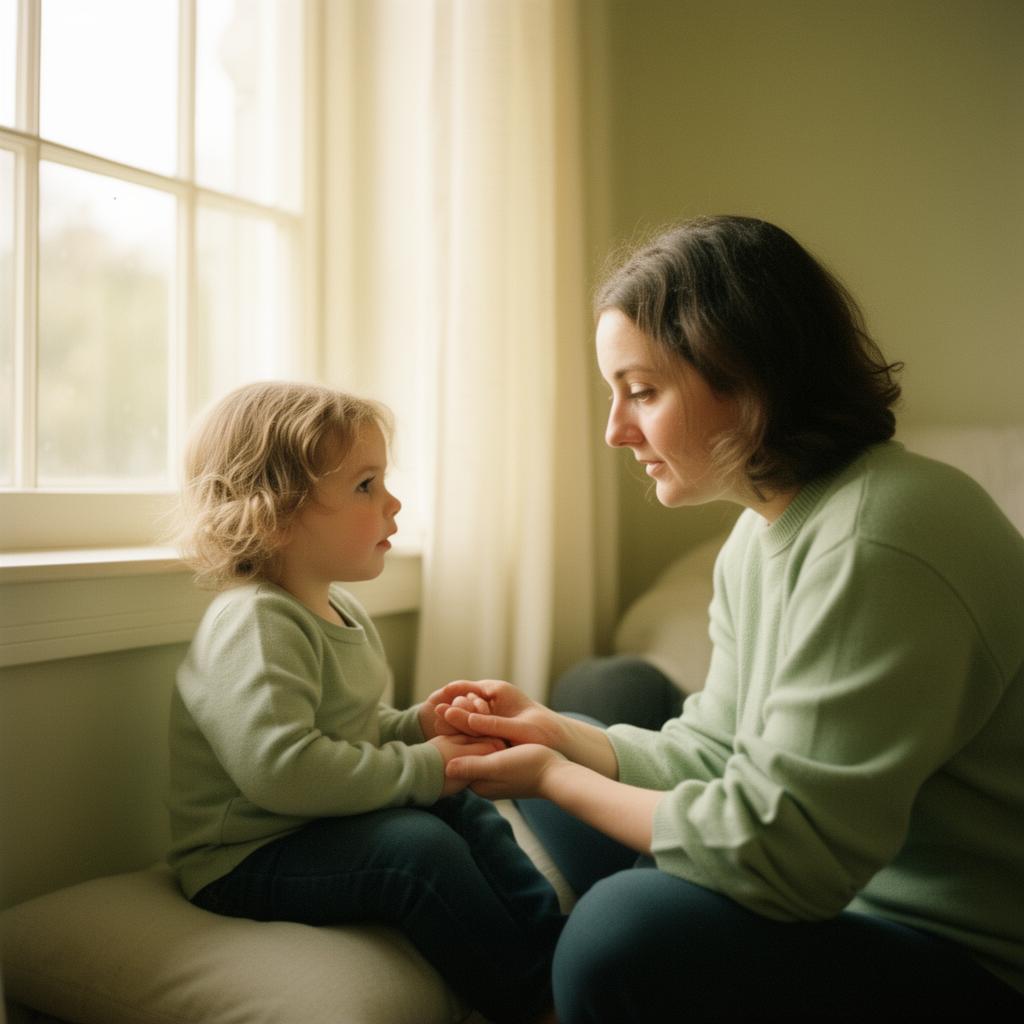
The afternoon we received our son's diagnosis, I sat in the car for a long time before turning the key. I remember the parking lot — the rough texture of the steering wheel under my hands, the way the light moved through the trees. Nothing in me felt ready. If you're reading this in your own version of that parking lot, I want to tell you a few small things I wish someone had told me.
You do not have to become an expert tonight.
The internet will offer you ten thousand pages within the hour, and most of them will be written for nobody in particular. Close the tabs. The decisions that matter — therapy choices, schools, specialists — almost never need to be made in the first week. You have time. Real time.
Tell one or two people, not everyone.
In the first days, choose one or two people who love your child without needing to fix anything. A sibling. A friend who listens well. Tell them, and let them carry a bit of the weight with you. The wider circle can wait.
"You don't have to know what comes next. You only have to be here, with your child, today."
Write down your questions, not the answers.
Keep a small notebook by the bed. When questions come — and they will, often in the middle of the night — write them down. Don't try to answer them yet. Just hold them. When you do meet with your clinician next, you'll have a list, and that list will be a quiet kind of power.
Look at your child.
This is the one I return to most. After a diagnosis, it is easy to start seeing only the diagnosis. The reports, the percentiles, the things to monitor. But your child has not changed since this morning. The way they laugh at the same silly word. The particular way they reach for your hand. Look at them. They are still entirely themselves.
What helped, in plain words.
- Meals from a friend. Practical love, no conversation required.
- One trusted source. A single book or organization recommended by our clinician — not twenty.
- A short walk, every day. Ten minutes outside, alone or with my partner. It helped more than I can explain.
- Saying no. To advice we hadn't asked for. To plans that would exhaust us. To the urgency that wasn't really there.
What I gently set down.
The pressure to feel any particular way. The comparisons to other families. The idea that I had to be brave in front of my child — I learned, slowly, that the bravest thing was to let him see me feel things, and to let him see me steady myself again.
You will find your own version of this list. It will not look like mine, and that's exactly right. For now, just this: today, your only job is to be here. Tomorrow, the same. The path opens as you walk it.
— With you,
A fellow parent
More from Getting Started
Walk the first steps with us.
Calm, practical guides for the days and weeks ahead — sent gently, never urgently.
Join our newsletter